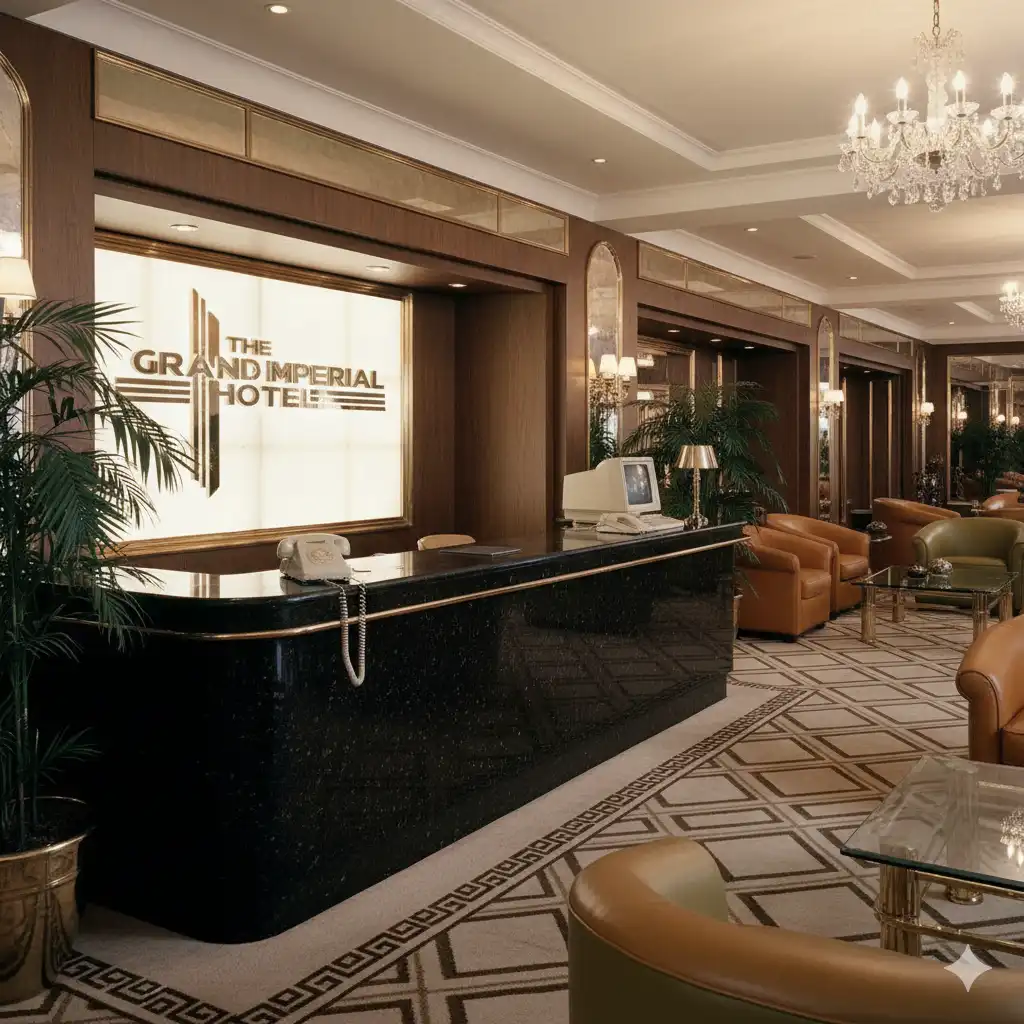
Hotel lobby music accompanies a surprisingly demanding conversation. A guest may be tired, carrying luggage, trying to understand directions, and checking a reservation on a phone. The soundtrack should help the lobby feel considered while leaving space for that welcome. Start with the arrival experience, then choose music that fits the hotel and can be maintained by every reception shift.
Follow the guest from the door to the lift
Walk the route an arriving guest takes. Pause by the entrance, at the queue, beside the reception desk, and near the lifts. Listen for abrupt changes in loudness and places where the music competes with conversation. A comfortable sound beside a sofa may be distracting at the desk.
Consider the lobby's other uses as well. Guests might work at a communal table, wait for a transfer, or meet friends before dinner. Write down these activities before choosing a musical direction. An attractive lounge atmosphere still needs to accommodate a clear explanation of breakfast hours.
Ask reception staff where they repeat themselves most often. That question can reveal a practical sound problem without asking them to become music specialists. Where necessary, discuss speaker placement and coverage with the person responsible for the audio system instead of increasing the whole room's level.
Give the lobby a musical character
Choose three descriptive words that match the property. A small coastal hotel might use “light, unhurried, informal.” A city hotel with bold contemporary interiors might choose “warm, precise, modern.” Neither description dictates a single genre, but both narrow the options.
Audition selections for texture as well as pace. Sparse arrangements can leave more room for speech. Strong vocal performances may draw attention even at a modest level. Bright percussion can feel quite different against hard flooring than it does through headphones.
Keep the musical identity broad enough to last beyond one trend. You can explore acoustic textures, understated electronic music, or restrained instrumental arrangements without suggesting that any one style is the definition of hospitality. The guide to music genres for business offers a way to describe those choices more clearly.
Build a reception routine that survives shift changes
Create a short handover note that explains the approved musical direction, the playback device, and who can resolve problems. Include a simple instruction for changing the mood when the lobby's use changes. Staff should not have to reconstruct the owner's preferences during a queue of arrivals.
For example, an early departure period might call for a gentle, steady background. An afternoon with guests chatting over coffee may allow a fuller texture. Late arrivals need a welcoming room even when the bar has closed. Make these decisions deliberately and document the manual steps your actual setup supports.
During the first week, ask staff to record exceptions rather than every track. Useful notes include “speech difficult beside reception at group arrival” or “sudden change in intensity after midnight.” Such details point to an adjustment. “Wrong music” is harder to act on.
Avoid making constant changes in response to individual tastes. Agree on a review owner and a regular opportunity for feedback. That protects a coherent atmosphere while giving the people who work in the lobby a voice.
Keep playback permission part of the plan
Use a provider whose commercial permission matches the hotel's intended use. Ask about the areas involved, the playback arrangement, and any limits before extending music beyond reception. A licence for one arrangement should not be assumed to cover every activity across a property.
SoundYou's catalogue playback is subject to its terms and licence certificate. Review that scope through SoundYou's legal information, and confirm any applicable local obligations. Music supplied by an event organiser, a live performer, or another source needs its own assessment; it is not automatically covered by the background music arrangement.
Store the relevant documents alongside the operating note. This helps a new duty manager understand both how the music is run and where to find the basis for its use.
FAQ
Q: Must lobby music be instrumental?
A: No. Vocals can suit a hotel when they remain comfortable behind conversation. Listen at the desk and assess the intensity and lyrical suitability of the selection rather than relying on an instrumental label alone.
Q: Should reception sound like the hotel bar?
A: The spaces can share a character while serving different activities. If music carries between them, listen at the boundary and address the overlap before choosing two competing moods.
Q: What is a sensible first step?
A: Write the arrival brief, test one musical direction, and collect reception feedback. Then explore SoundYou pricing and its curated business music against that brief. A successful lobby soundtrack is one your team can keep appropriate through a whole day of arrivals.