
"We apologize, we're running 15 minutes behind." That sentence usually spells disaster and frustration. But not everywhere. As a regular guest at some of Europe's finest hotels, I've noticed that in certain places, waiting actually becomes... a pleasure. The secret? It's not the complimentary coffee: it's what your ears hear.
Let's be honest, none of us like to wait. In an era of instant notifications, fast bank transfers and express coffee, every idle minute hurts twice as much. Yet in the service industry, no matter how flawless your scheduling, delays are inevitable. A client's appointment ran over, the coloring process got complicated, or simply, life happened.
The real question is: what happens to a client sitting on the sofa in your reception area? Are they nervously glancing at their watch, or are they... unwinding? The answer lies in the invisible architecture of time that you build with sound.
Why Does Time Flow Differently in a Hotel?
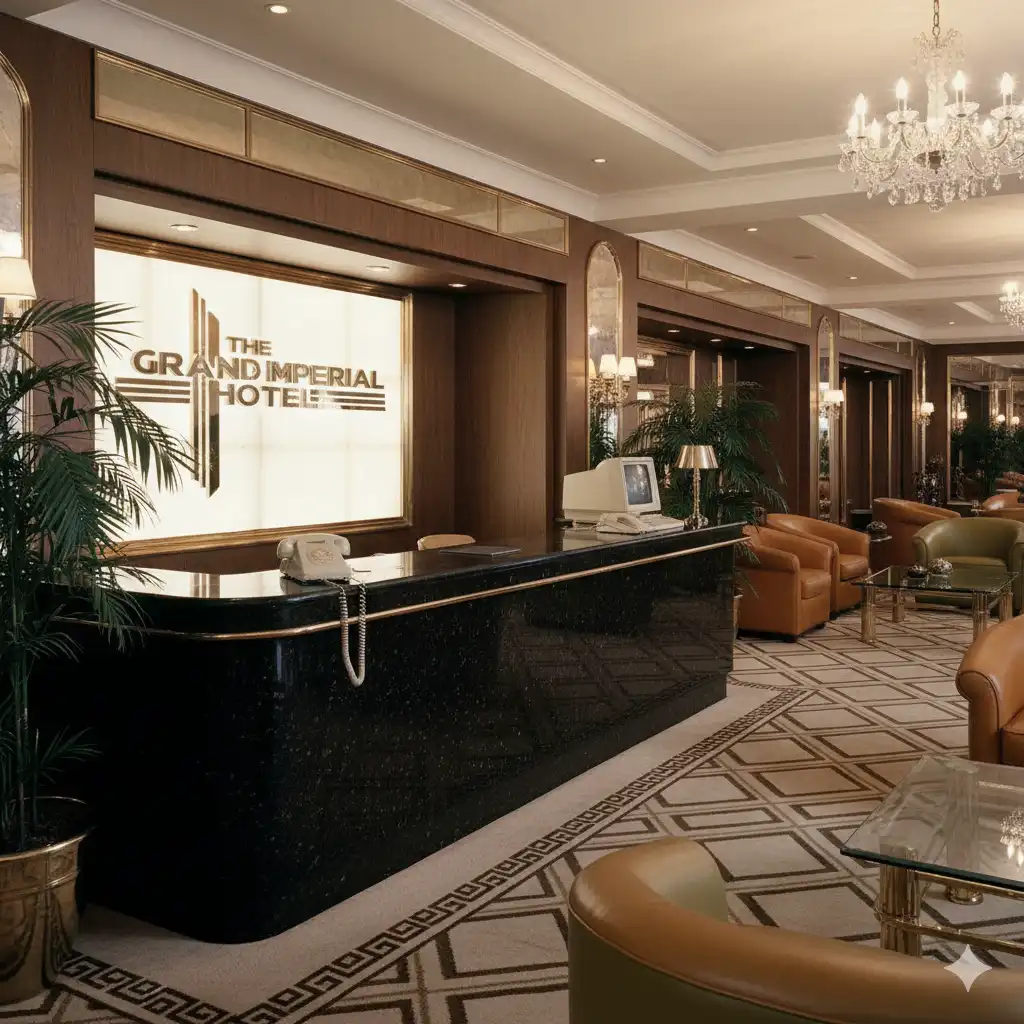
I travel frequently for work and have something of a professional bias: I analyze hotel waiting areas. Have you ever noticed that waiting to check in at a good five-star hotel lobby is rarely irritating?
That's no accident. A premium hotel reception is designed to slow your heart rate before you even reach your room. You will never hear news broadcasts about politics or aggressive advertisements there. What you encounter instead is a carefully orchestrated audiosphere.
The music in such places has a specific tempo (typically below 70 beats per minute) and a particular timbre. It acts like a "sonic Botox" for your nerves. Your brain stops analyzing the passing of seconds and begins absorbing the atmosphere. This is precisely the mythical client experience that the very best establishments fight for.
Silence Is the Enemy, Noise Is the Saboteur
Many salon owners make one of two mistakes in their reception zone:
- Dead silence: This is the worst scenario. In silence, every sigh, shuffle of shoes and nervous tick of the clock is audible. Time subjectively slows down: 5 minutes in silence feels like 20. The client feels watched and self-conscious.
- Radio cacophony: A television blaring a news channel or a radio playing the latest chart hits. This is a bombardment of stimuli. Instead of relaxation, you're serving your client information overload. If the delay lasts 10 minutes and during that time they hear about accidents, inflation and an advertisement for a bloating remedy, they'll enter the treatment room tense and demanding.
How to Manipulate Time (Legally)?
Music psychology has a concept called Time Perception Distortion. The right music can make waiting time feel shorter than it actually is.
If you want your reception area to become a decompression zone, you need to apply a few principles that we have built into SoundYou playlists:
- Flow and no gaps: Tracks must transition into one another without silence (so-called crossfade). Silence is the moment when a client "wakes up" and checks the time.
- "Soft" instruments: Felt piano, acoustic guitar, gentle electronics. Avoid saxophones and high-pitched vocals that engage attention.
- Masking: The music should be loud enough to cover the receptionist's phone conversations (privacy!), but quiet enough that no one needs to raise their voice.
Your Reception Area Is Your Business Card
Remember, the service doesn't begin in the treatment chair. It begins the moment your client crosses the threshold. If a client spends 15 minutes in an environment that soothes their senses, they will experience that time as a "free moment of relaxation" rather than time wasted.
At SoundYou, we don't simply create "background music." We design time. With our playlists, even if you're running a little late, your client will forgive you with a smile. Because in good company, and with good music, time passes differently.
Transform your waiting area into a VIP relaxation zone. Hear what professionalism sounds like: Listen to the SoundYou demo and see pricing