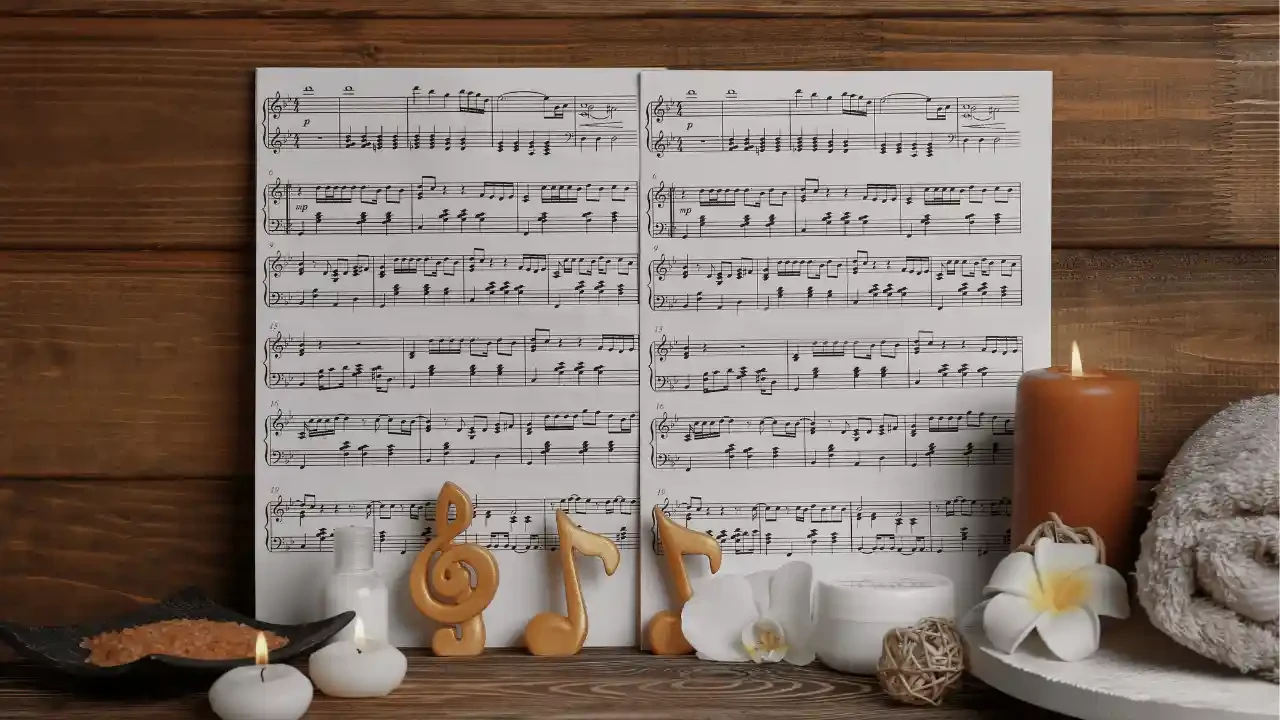


One recording rests on a few piano notes; another uses a long, sustained synthesiser sound. A third introduces a flute or a gentle percussion pulse. All might be described as wellness music, although they offer quite different listening experiences.
The five approaches below help put those differences into words. Some are broad styles; others describe an influence or an arrangement. Their boundaries overlap: piano can be part of ambient, and an acoustic instrument can appear in downtempo.
1. Ambient: tone and time
In calm ambient music, it is often hard to pinpoint the start of a new phrase. Sounds sustain, overlap and slowly change in density. Tone leads the attention more than a verse, chorus or pronounced rhythm.
Brian Eno's 1978 release Ambient 1: Music for Airports is an important point in this music's history. The publisher's account connects the album with giving ambient a clear concept as music for an environment. It offers a way of thinking about sound as part of a space. Contemporary spa music draws on a gentler part of ambient's much broader world.